
Best Memory Foam Pillow for 2026: Side-by-Side Editorial Review

If you’re dealing with neck stiffness when you wake up, shoulder pressure from side sleeping, or the recurring cost of replacing flattened pillows every few months — you’re not alone. Most side and back sleepers know their pillow setup needs attention, but with dozens of memory foam pillow options on the market all claiming to work, it’s hard to know what actually delivers.
We spent weeks researching 12+ memory foam pillows, analyzing hundreds of customer reviews, and comparing the contouring, loft, cooling, and support design behind each product. These are the 3 that consistently deliver real results — and our #1 pick uses an adjustable contour memory foam design with dual-height support zones that none of the others offer.
- Independent Reviews
- No Sponsored Rankings
Our rankings reflect editorial judgment based on research, product positioning, and typical use cases. Different products may be better suited to different needs, conditions, or budgets.
Quick Comparison
| Editor's Choice #1 Melara Max | #2 Snorinator Pillow | #3 Derila Ergonomic Pillow | |
|---|---|---|---|
| Our Rating | ★★★★★ | ★★★★☆ | ★★★★☆ |
| Typical Price | $69.95 | $179.98 | $59.99 |
| Adjustable loft options | Yes – dual-height contour sides plus removable insert | Limited – fixed contour profile | Partial – one adjustable insert |
| Side-sleeper neck gap support | Yes | Yes | Limited |
| Cooling design | Ventilated foam + breathable cover | Gel-infused foam cover | Basic memory foam with standard cover |
| Pressure relief for shoulder loading | Included | Included | Partial |
| Shape retention after regular use | High-density foam designed to resist flattening | Dense foam but firmer break-in reported | More mixed long-term consistency |
| Cover care | Removable, machine-washable cover | Removable washable cover | Removable washable cover |
| Sleep-position fit | Best for side and back sleepers | Mostly side sleepers who like firmer support | Back sleepers and lighter-build side sleepers |
| Check Availability | See Pricing → | See Pricing → |
Melara Max
- Our Rating
- ★★★★★
- Typical Price
- $69.95
- Adjustable loft options
- Yes – dual-height contour sides plus removable insert
- Side-sleeper neck gap support
- Yes
- Cooling design
- Ventilated foam + breathable cover
- Pressure relief for shoulder loading
- Included
- Shape retention after regular use
- High-density foam designed to resist flattening
- Cover care
- Removable, machine-washable cover
- Sleep-position fit
- Best for side and back sleepers
Snorinator Pillow
- Our Rating
- ★★★★☆
- Typical Price
- $179.98
- Adjustable loft options
- Limited – fixed contour profile
- Side-sleeper neck gap support
- Yes
- Cooling design
- Gel-infused foam cover
- Pressure relief for shoulder loading
- Included
- Shape retention after regular use
- Dense foam but firmer break-in reported
- Cover care
- Removable washable cover
- Sleep-position fit
- Mostly side sleepers who like firmer support
Derila Ergonomic Pillow
- Our Rating
- ★★★★☆
- Typical Price
- $59.99
- Adjustable loft options
- Partial – one adjustable insert
- Side-sleeper neck gap support
- Limited
- Cooling design
- Basic memory foam with standard cover
- Pressure relief for shoulder loading
- Partial
- Shape retention after regular use
- More mixed long-term consistency
- Cover care
- Removable washable cover
- Sleep-position fit
- Back sleepers and lighter-build side sleepers
How We Evaluated These Products See all 4 evaluation criteria Hide evaluation criteria
These rankings are based on editorial research into product specs, public policies, and customer feedback patterns. There was no lab testing, no independent verification of customer reviews, and ratings reflect editorial judgment.
Neck alignment support
Adjustability for fit
Cooling and airflow design
Shape retention over time
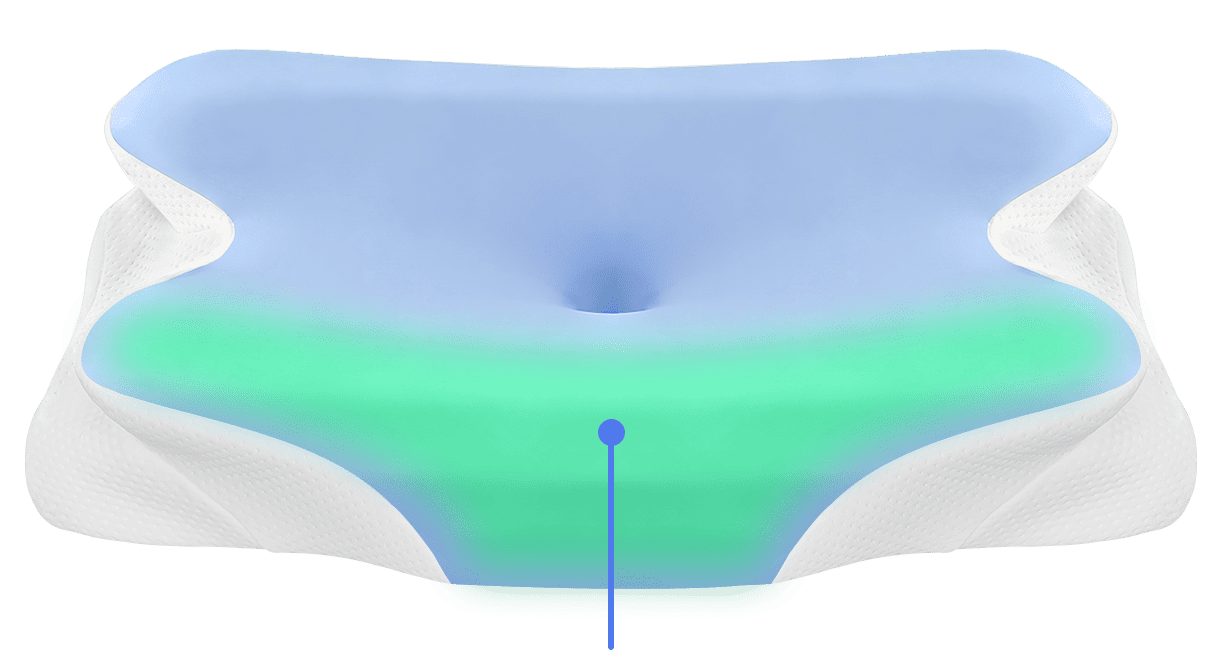
Why Melara Max Stands Out
Our editorial team’s top pick for memory foam pillow.
Melara Max ranked first because it offers the most balanced setup for shoppers looking for a memory foam pillow for neck pain, especially side sleepers who need contour support without committing to one fixed loft. Its adjustable contour design, cooling-oriented cover, and lower-risk return window make it easier to recommend than the pricier premium option and more complete than the budget pick.
What We Liked
- Adjustable contour setup helps dial in fit for side and back sleepers
- Dual-height support zones can reduce the usual loft guesswork
- Ventilated memory foam and breathable cover may sleep cooler than basic foam pillows
- Good value relative to the premium alternative
- Generous trial-style refund window lowers buyer risk
What Could Be Better
- May feel too structured for stomach sleepers
- Some customers may need a few nights to adjust to the contour shape
- New-foam odor can happen at first
- Not the cheapest option in this category
What Customers Are Saying
I suffered from severe snoring and was at the stage of requiring treatment for sleep apnea. It has been about two months since I started using Melara, and according to my wife I hardly snore anymore.
After using it for a few days I found that I was getting a deep, restful sleep throughout the night. I was so satisfied that I recommended it to my friends.
Source: Customer reviews
Results vary; individual experiences may differ.
Is Melara Max right for you?
Great fit if you:
- Shoppers wanting a more complete approach to memory foam pillow
- Buyers who value the included guarantee and support
- Anyone willing to use the product consistently to judge results fairly
May not be the best fit if:
- Shoppers on a tight budget — see the budget pick at #3
- People needing fast, dramatic results from a single use
Melara Max Pricing
🔒 Try Melara Max Risk-Free – 30-Night Guarantee
Pricing shown as of October 2026. Visit the official site for the most current pricing and availability.
#2 Runner-Up: Snorinator Pillow
Premium alternative for memory foam pillow
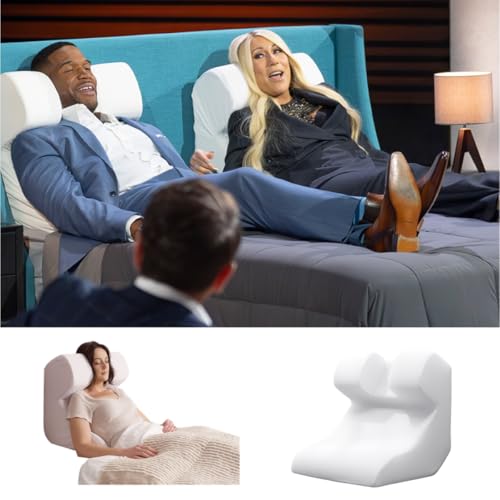
Snorinator Pillow is the more premium-leaning choice for shoppers who prefer a denser, firmer memory foam cervical pillow and do not mind paying more for a niche feel. It can make sense for certain side sleepers, but its narrower comfort window and higher typical cost make it harder to rank above Melara Max.
Where Snorinator Pillow falls short for many shoppers is the price-to-need ratio — the higher upfront cost makes sense for buyers who specifically want a more premium-feeling option, but for the average reader the trade-off rarely justifies the difference. It’s still a reputable pick within memory foam pillow, just better suited to a narrower buyer.
Why It's #2 and Not #1
For most shoppers, Snorinator Pillow is overkill. It’s positioned for buyers who specifically value the premium experience, and the price reflects that. The biggest difference, though, is that it doesn’t address the underlying issue the way our top pick does — based on the research, that’s what makes the real difference for most readers.
#2 Runner-Up: Snorinator Pillow | Is Upright Sleep Worth the Premium Price?

The Snorinator, as seen on Shark Tank.
The Snorinator is a structured memory foam pillow designed to support your upper body in an upright sleeping position. It’s marketed for snoring relief, nighttime acid reflux, recovery after surgery, and pregnancy-related comfort, with a current advertised price of $159.99.
That makes it worth a close look if ordinary pillows leave you uncomfortable or constantly rebuilding your nighttime support. But the real question is whether its distinctive shape suits your body and sleeping habits well enough to justify the investment.
Review note: This is a research-based assessment, not a hands-on sleep test. I haven’t personally verified its comfort, durability, or symptom relief.
Design and Build Quality
The Snorinator looks more like a cushioned backrest than a conventional bed pillow. Product photos show a tall, sculpted design with a broad lower section and two prominent cushions that cradle the head. It has a practical, supportive appearance rather than the understated look of an ordinary pillow.
The manufacturer specifies high-density, CertiPUR-US-certified memory foam and includes a fitted, machine-washable pillowcase. That removable cover is a useful feature for something intended for regular use. However, material specifications alone can’t tell me how comfortable the foam feels after six hours or how well it maintains its shape over several years.
Its size deserves attention:
| Size | Listed dimensions | Listed weight |
|---|---|---|
| Small | 17 × 17 × 19 inches | 9 pounds |
| Large | 20 × 20 × 22 inches | 11 pounds |
The brand uses roughly 5 feet 6 inches as the sizing dividing line, although its pages differ on which size someone exactly that height should choose. Confirm your fit before ordering. These dimensions also make it a substantial item to move, store, or pack for travel.
My assessment: the construction is thoughtfully specified for upright support, but I wouldn’t equate a premium price or foam certification with proven long-term comfort.
Performance and Features
Ergonomics: a substantial change in sleeping position
The advertised 66-degree incline, lumbar support, and head-cradling cushions make this a much more upright setup than simply adding another pillow. The intended arrangement is against your headboard, with your back supported and your head settled between the upper cushions.
That design could appeal to someone who already rests comfortably in a recliner and wants comparable positioning in bed. My concern would be fit: support only helps if the cushions meet your head, neck, and lower back in the right places. Someone who changes positions frequently may find the structure restrictive.
The manufacturer acknowledges an adjustment period of up to around 30 days. That’s an important expectation to set: this may involve learning a new way to sleep, rather than enjoying instant comfort on the first night.
Snoring: a potential benefit, not a promised cure
The brand targets nonclinical snoring and explicitly excludes people diagnosed with sleep apnea. Its FAQ also advises against purchase for people it describes as seriously overweight, without providing a clear weight threshold.
I would treat quieter nights as a possible benefit to evaluate, not an assured result. I didn’t find a product-specific clinical trial in the sources reviewed that establishes how reliably the Snorinator stops snoring. If you already know that changing your position reduces your snoring, its design is more compelling than it would be for someone buying purely on hope.
Acid reflux: a reasonable concept, but the incline may be more than you need
For nighttime reflux, elevating the upper body has a sound practical basis. NIDDK guidance includes raising the head and upper back with a foam wedge or pillows to elevate the head by 6–8 inches. Elevation can help manage symptoms; it doesn’t stop your stomach from producing acid.
That supports the general idea behind this pillow, but it doesn’t establish that the Snorinator’s steep incline is necessary or better than a gentler wedge. If reflux is your main concern, I’d consider whether a simpler incline gives you enough relief before committing to such an upright setup.
Recovery after surgery: match it to your recovery instructions
The company markets the same pillow for postoperative support under the PostOpinator name.
Its potential value is straightforward: a single shaped support could make resting easier than repeatedly arranging several loose pillows. But suitability depends on your operation and prescribed position. Ask your surgical team whether this particular angle and support arrangement fit your recovery plan. I wouldn’t buy it on the assumption that every surgery calls for upright sleep.
Pregnancy: distinguish resting support from overnight sleep support
The manufacturer also promotes it as the Mamanator for upright comfort during pregnancy.
That doesn’t make it my first choice as an all-purpose pregnancy sleeping pillow. NHS guidance recommends going to sleep on your side after 28 weeks, with pillows supporting the bump and between the legs as needed. The sources reviewed don’t establish that this upright design is an equivalent alternative.
For pregnancy, I’d consider it for clinician-approved upright resting rather than assume it replaces a pillow designed around side sleeping.
Pros and Cons
Pros
- Purposeful support layout: The back and head supports offer a coherent setup for someone who wants to rest upright.
- Potentially less pillow rearranging: One shaped support may be more convenient than rebuilding a stack whenever you move.
- Washable fitted cover included: A practical advantage for routine cleaning.
- Two sizes: More opportunity to find a suitable fit than a single-size design.
- No powered mechanism: Its positioning approach requires no charging, app, or nighttime controls.
Cons
- No opened-pillow comfort return: You can’t assume you’ll receive a refund if you try it and dislike it.
- A demanding change in posture: Upright sleeping may feel awkward, especially if you prefer your side or stomach.
- Bulky and relatively heavy: Moving or storing it could be inconvenient.
- Relief remains uncertain: A well-shaped pillow can still fail to address your particular symptoms.
- Limited pregnancy versatility: It isn’t designed around the bump-and-leg support many side sleepers want.
- Fit uncertainty: Height-based sizing doesn’t fully account for differences in torso length or preferred posture.
Who Is This Best For?
The ideal buyer is someone who already knows they rest comfortably upright, wants more structured support in bed, and accepts the financial risk of buying without an opened-product sleep trial.
It’s most worth considering for:
- A snorer without diagnosed sleep apnea who has noticed improvement with positional changes.
- Someone whose reflux improves with elevation and who prefers a steep, supported posture.
- A postoperative patient whose surgical team approves this arrangement.
- Someone seeking upright resting support during pregnancy, with guidance from their maternity clinician.
I’d be less enthusiastic for an uncertain first-time buyer, a restless side sleeper, or anyone expecting one pillow to reliably resolve several different medical symptoms.
Guarantee and Returns: Read This Before Opening
The current published policy does not offer a money-back sleep trial.
The manufacturer states that pillows opened from their original packaging or allowed to uncompress are ineligible for return or exchange. Its stated return allowance specifically covers gifts still unopened in their original shipping box, within 30 days of purchase. Refunds go to the original payment method, minus an $18.50 per-item restocking charge.
For a potentially eligible return, contact the company through its support page before shipping anything. Request confirmation of eligibility, the return address, and any shipping costs. The published policy doesn’t explain those procedural details or establish a broader return right for ordinary purchases.
The advertised adjustment period is therefore time to get accustomed to the pillow, not time to test it risk-free.
Final Verdict: 4.2 out of 5
My recommendation: don’t jump on this unless you already know upright sleeping works for you.
Why it’s our number 2 recommendation, and not number 1.
The Snorinator offers a distinctive, potentially useful support system for a specific buyer. If it helps you stay comfortable in a position that already eases your symptoms, its price could be reasonable.
But for someone still discovering what brings relief, the uncertainty around comfort and the restrictive return policy make it a difficult premium purchase to recommend broadly. My 3/5 rating is a research-based buying assessment, reflecting its thoughtful design alongside those limitations—not a measured score from personal testing.
For reflux alone, consider a gentler wedge with a clearly documented comfort-return policy. For pregnancy sleep, prioritize appropriate side-sleeping support. For postoperative use, let your recovery instructions determine the purchase. Buy the Snorinator when its particular shape solves a known positioning problem; skip it when you’re paying mainly for the promise of relief.
#3 Budget Pick: Derila Ergonomic Pillow
Budget option for memory foam pillow
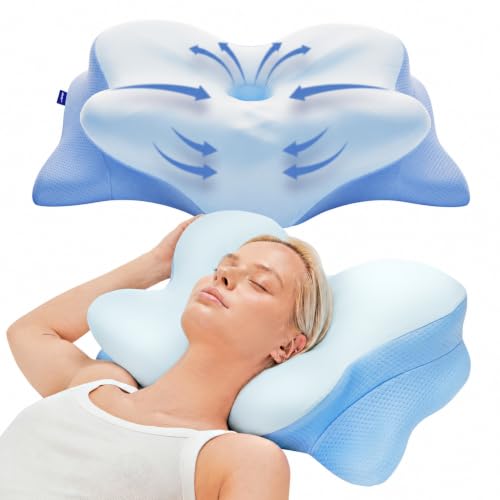
Derila Ergonomic Pillow is the lower-cost option for shoppers who want to try a contour memory foam pillow without spending much upfront. The tradeoff is a simpler feature set, less adjustability, and more mixed feedback around loft fit for broader shoulders and dedicated side sleepers.
Derila Ergonomic Pillow is the cheapest option in this comparison, and it shows: fewer features, simpler design, and less depth of treatment than the higher-ranked picks. For shoppers who only want the bare minimum and don’t expect dramatic results, it’s the most affordable way to get started in memory foam pillow.
Why It's #3
Using Derila Ergonomic Pillow is like changing your oil but never checking the engine — it’s a good habit, but it’s not going to fix problems. It won’t help with deeper issues in memory foam pillow, it offers no money-back guarantee on most listings, and for shoppers who want more than just going through the motions, the difference between it and the top pick is night and day.
Our Pick: Melara Max
See Melara Max Pricing →Which should you choose?
Choose Melara Max if you want the best overall balance of value and support. Pick Snorinator Pillow if you prefer the premium-grade alternative and don’t mind paying more. Go with Derila Ergonomic Pillow if you’re on a tight budget and just need the basics.
Different products may perform better depending on your specific situation, preferences, and budget. Read each review carefully before deciding.